Rewilding mudflats: Rewriting geomorphological, ecological and political entanglements. A REWRITE approach to defining ‘rewilding’
by Werner Krauß, University of Bremen
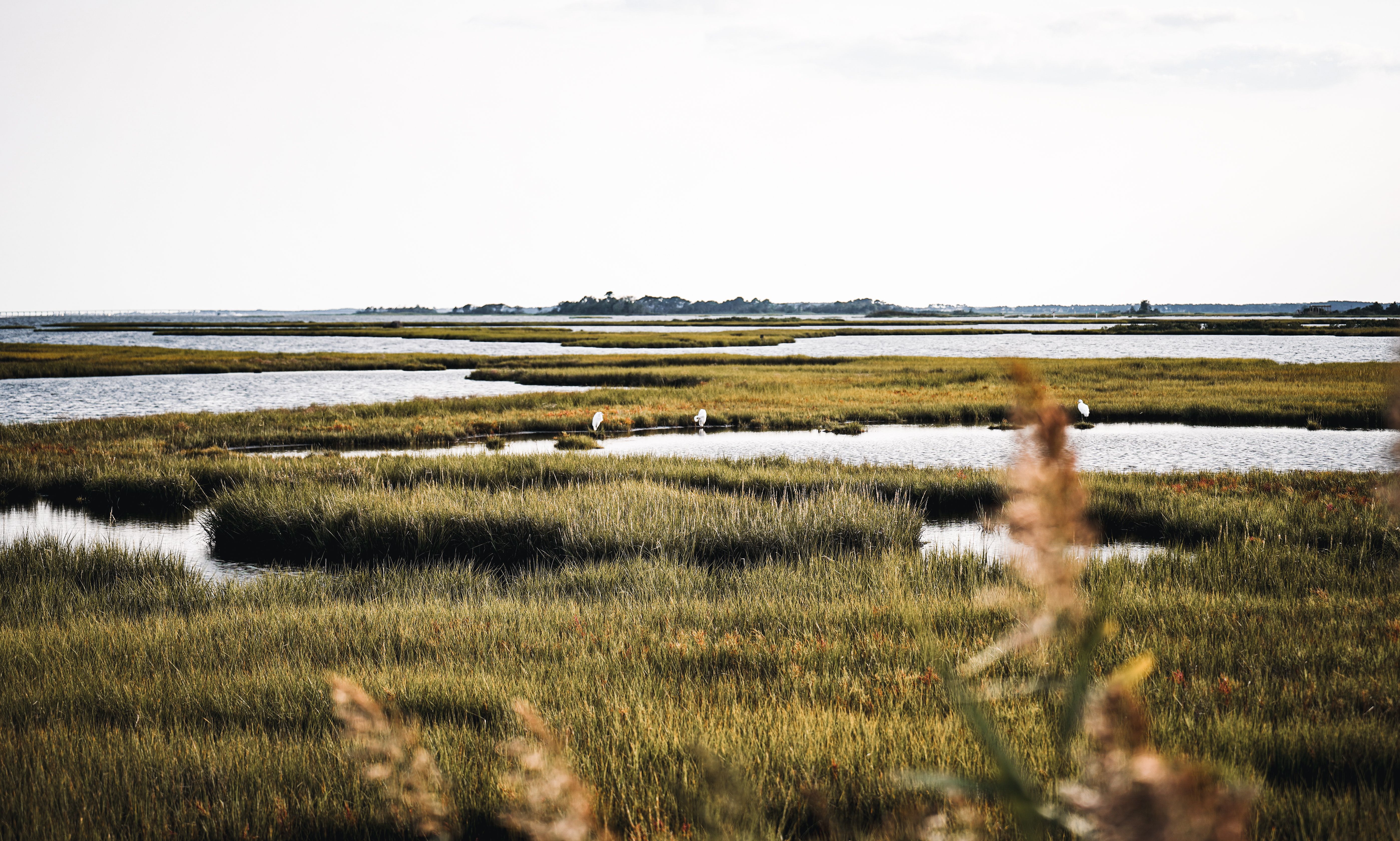
There are many rewilding definitions out there. The most prominent are trophic rewilding – introducing key animal species, such as water buffaloes – and process-based rewilding, allowing landscapes and ecosystems to develop with minimal ongoing human control. These definitions have been debated extensively, in theory and in practice, and they have been applied under different ideological regimes and in very different ecosystems.
In REWRITE, we take another path towards a definition: we start from intertidal soft sediment coastal areas, those muddy areas where your feet sink into the slimy dark ‘Schlick’, and where you never know exactly where the land begins and the sea ends. These areas are difficult to define as ecosystems, because their boundaries are permanently shifting and they do not tend towards equilibrium or balance. There is a permanent land-sea connectivity, a continuous flux instigated by the tides. And if you dig into the mud, you will find a world full of wonders – tiny organisms and species adapted to the changes each tide brings.
Of course, these areas are governed, and they are infrastructure. They are framed by dikes protecting the land from the sea; there are ports and industries, shipping routes, and tourist infrastructures, and most of them are under some form of nature protection. In short, the areas we want to rewild are geomorphological – layers of sediments in movement; they are ecological – shaped by very specific mudflat ecologies; and they are political – full of history and under permanent reconstruction and negotiation.
Mudflats are landscape, seascape, and connectivity at the same time. They are also a critical zone. They are critical in terms of life support: mudflats are areas where microalgae and other organisms contribute to the creation of life, the storage of carbon, and the stabilization of coastal systems. But they are also critical in another sense: endangered by industrial expansion, rising sea level, coastal erosion, overtourism, and competing political interests.
This is the muddy and fluid framework for our understanding of rewilding: the geomorphological, ecological, and political entanglements that make up a mudflat area.
Through centuries of reclamation, mudflats have been turned into agricultural land; ports have been created, dikes have been built, and salt pans established. Each mudflat is its own assemblage of soils, tides, organisms, infrastructures, memories, and governance, with changing meanings over time: from land to be reclaimed to protected area, from peripheral wasteland to hotspot of globalization. Today, these areas increasingly fall under the spell of a climate regime: rising sea levels threaten coasts and mudflats alike; coastal populations have to adapt to climate change; and mudflats themselves are being rediscovered for their capacity to store carbon and enhance biodiversity. This implies a profound shift in meaning and governance.
This is where rewilding comes in, as understood by REWRITE. We take our shortcut literally and argue that rewilding means rewriting geomorphological, ecological and political entanglements in ways that enable different coastal dynamics and possibilities. If mudflats are governed infrastructures, what happens when control is reduced or reorganized in parts of them in order to support certain dynamics, organisms, and fluxes? What happens when less emphasis is put on stabilization and domestication, and more on the capacity of mudflats to reorganize themselves?
Under such conditions, microalgae might flourish and enter new alliances with light, mud, tides, and other organisms. Rewilding, then, is not about returning to a pristine past. It is about carefully rewriting the conditions under which coastal life can unfold differently.
Rewriting means moving beyond territorial ideas of rewilding – the rewilding of a bounded ecosystem – and shifting the focus to the delicate relationships we as humans maintain with permanently shifting soils into which our feet sink, and with companion species as tiny as microalgae, which cover grains of sand with biofilms, or seagrass, which breaks the waves and once covered the roofs of fishermen’s houses.
And, of course, it means discussing oil and gas drilling, military expansion, global trade ports, cruise ships and overtourism in relation to the ecology and geomorphology of these vulnerable areas. It also means discussing land use, ownership, and access to the mudflats; discussing how past, present, and future become entangled under the pressure of climate change scenarios. Nature protection once was remarkably successful, but it often focused on singling out protected areas while leaving the wider networks they depend on untouched. Rewilding as rewriting takes another turn — forced by climate change, and by love of mudflats.