Why, in coastal climate adaptation, doing less is doing more
by Iris Möller, Trinity College Dublin
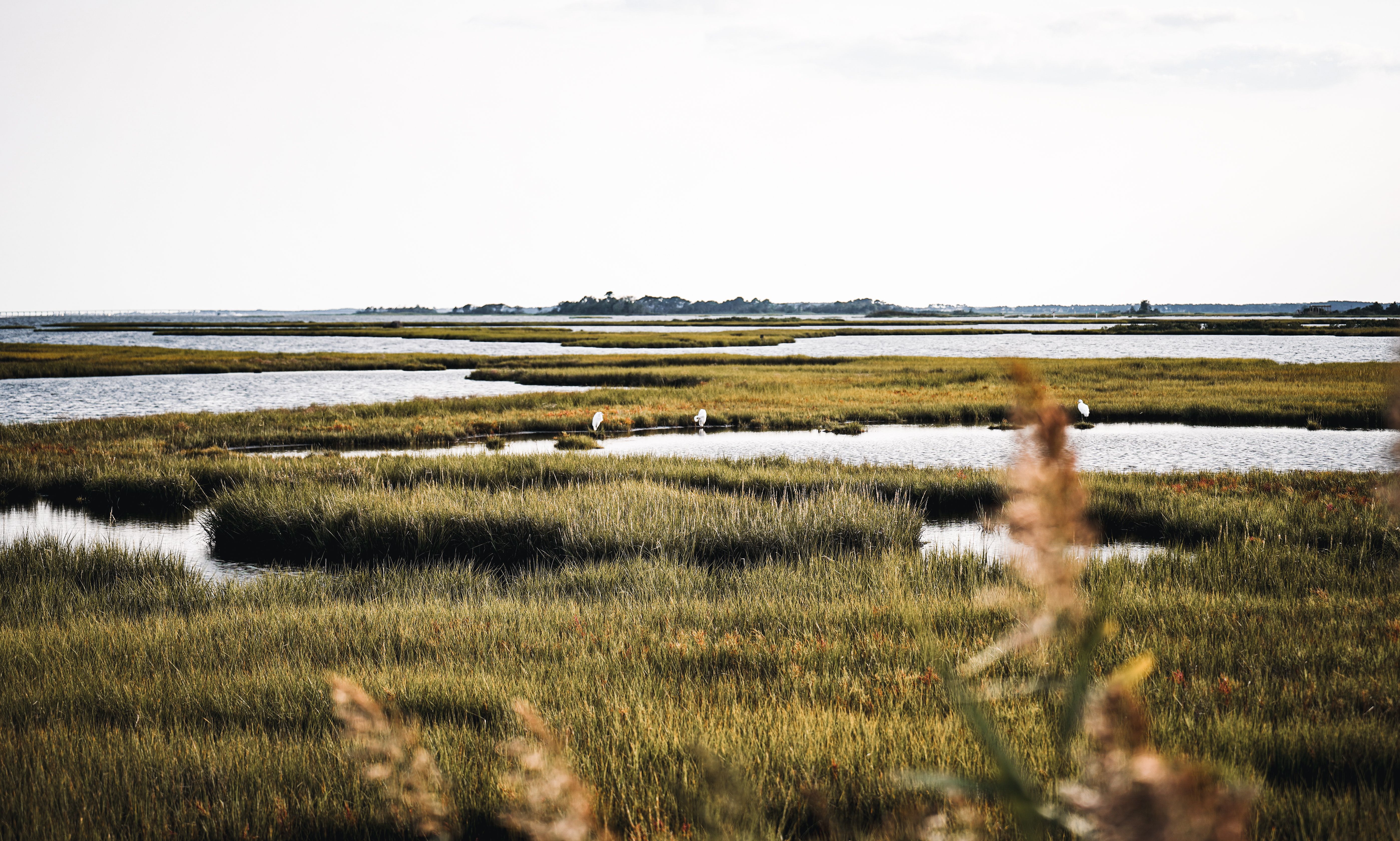
Over millennia, human society has valued proximity to the water’s edge, to our ocean fringes, where we had access to food, resources, a means of travel, and found solace and inspiration. Culturally, access to the ocean via sheltered and/or shallow areas of the coast defined many early human communities and still does so today. From sea shanties to sacred coastal burial grounds, there is no doubt that our connection to the sea, via the coast, has left an imprint on our history and culture.
Early human settlers and many indigenous coastal communities, however, are known to have structured their daily and seasonal lives around what is inevitably a dynamic land- and constantly shifting coast-scape. In contrast, industrialised coastal settlements and cities of the global north have and continue to respond to this in-built dynamism of coastal places with fixed infrastructure and an unfaltering belief that human ingenuity can ‘conquer’ the challenge of an ever-changing context. We talk about ‘defending’ us from the sea, to ‘armour’ our coast, to ‘protect’ ourselves as if we are in a war with the sea.
We respond to nature’s dynamic rhythms by using engineering to exclude them from our daily experience as much as possible. Bounding a gently sloping tidal flat or sandy beach with a vertical sea wall, we believed (and still largely do), will allow us to safely encroach close to the coast with our infrastructure, homes, lives. It will allow us to clearly define and know where the land stops and the sea starts. It will allow us to know where we stand, to feel safe and in control. But do we and are we?
After multiple engineering failures, as so expertly listed in Orrin Pilkey and Andrew Cooper’s (2014) book ‘The Last Beach’, we now realise that we cannot predict such a complex multi-dimensional system, least of all as it is shaped so heavily by extreme events that are caused by weather extremes we simply cannot predict. Not only do we now realised that we cannot predict the sequencing and magnitude of critical coast-shaping weather events, or their precise nature and evolution, we also now realise that such extreme weather events may in fact be needed to ensure the coastal environments continue to function fully. Extreme weather events that cause exceptionally high water levels, for example, are often the only mechanism for a coastal wetland to receive the sediment input it needs to keep pace with sea level rise or to deliver nutrients to the adjacent ocean, the ecology of which depends critically on them.
We also realise that nature is always one step ahead of us. Build a seawall and watch the forces of nature undermine it, and the beach disappear. Build a storm surge barrier and watch the high river flow back up landward of the barrier. Stop the erosion of soft coastal cliffs through hard protective rock armour, and watch the sediment supply to salt marshes, dunes, and tidal flats dwindle to the extent that these environments cannot keep pace with an accelerating rise in sea level or start eroding at their margins. And there are many more such examples…
Most importantly, perhaps, over recent decades, we have begun to realise that natural coastal features and ecosystems provide many benefits to us that we had not appreciated, including coastal protection. To harness the benefits such features provide (coastal protection, carbon storage, biodiversity, food provisions, etc), will require us to safeguard or restore them. But what does that really mean?
Can we really restore nature in predictable ways when the very forces that drive that nature are known to be unpredictable?
Examples such as the EU Habitat’s Directive could be drawn on to show that we still think we can use nature in the same way we used engineering – i.e. that, by applying general physical, biological, (or biophysical) process knowledge we can 'build' (although we call it 'restore', 'create', or 'construct') 'natural' features (dunes, marshes, seagrass beds). Essentially, we have moved from constructing structures to constructing habitats. We measure how they function and what they do for us and we use that to argue that we need them and that we need to 'work with natural processes' to have them.
But what about the natural processes that shape our coastal environment? If they are intrinsically unpredictable and non-linear, is the expectation that we can ‘restore’, ‘create’ or ‘construct’ to a known expected outcome, not problematic? Within REWRITE, we saw a storm caused the disappearance of microphytobenthos from the tidal flats in the Loire estuary. These were the very microphytobenthos that we were going to target for our measurements of carbon fixation and they simply disappeared during one storm. Perhaps not forever, but who can say? And who can say when precisely (or whether at all) they will reappear? To know that would mean to know the sequence and nature of weather fluctuations – and we do not, cannot and never will, given the unpredictable nature of meteorological systems.
In the urban context of Dublin Bay, we saw the smothering of dune habitat by sand and shell overwash deposits during storm Chandra in February 2026. We ‘lost’ dune vegetation in the process, but it is already growing back. What would have happened if we had had further storms in quick succession? What will happen next winter?
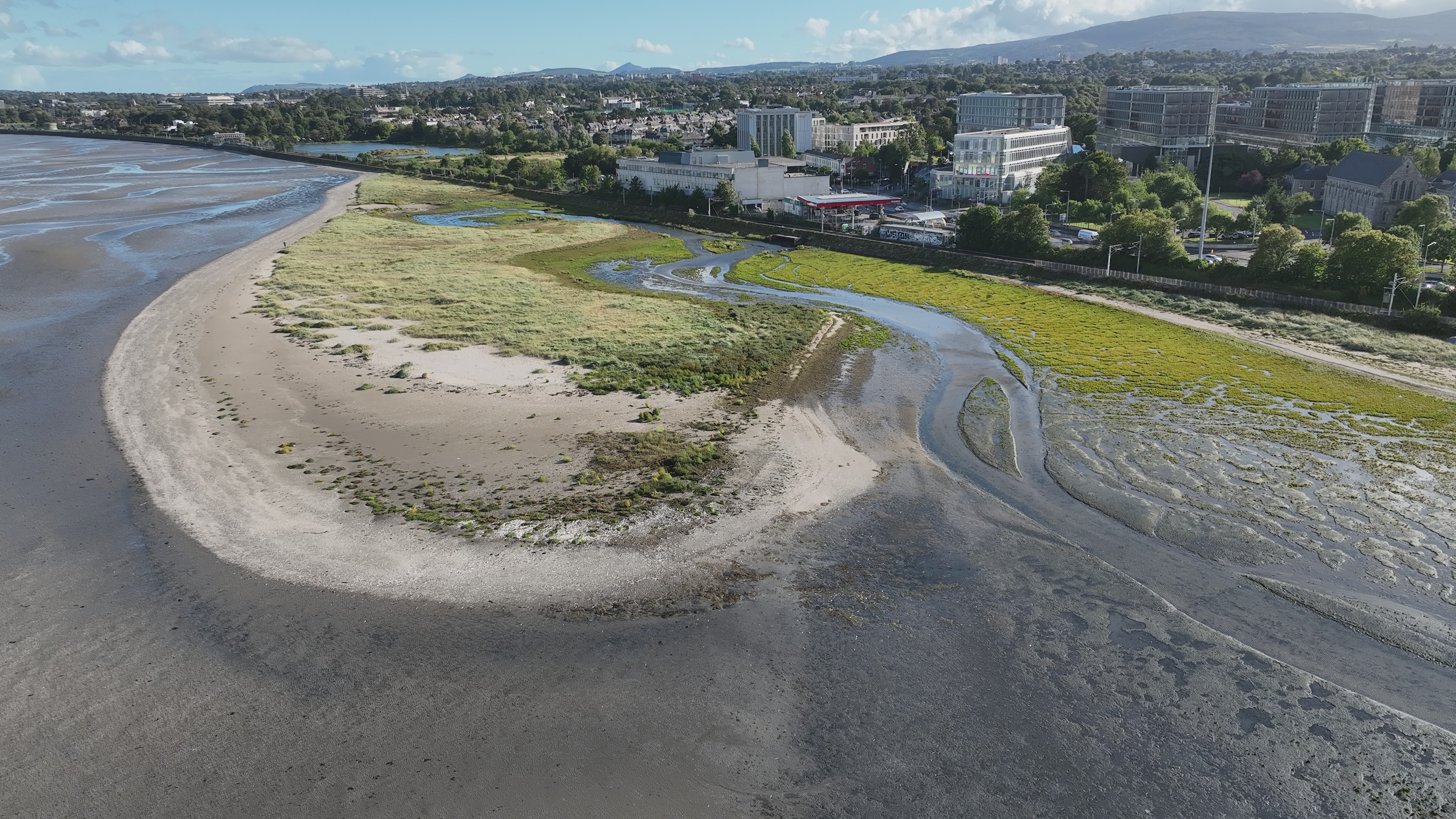 Photo credits: Dr Charmaine Cruz
The way forward is surely not to expect a fixed or even predicted outcome, but to watch closely, to learn from and to truly work with nature on its terms, adaptably and flexibly, rather than on our terms. That may occasionally require us to give nature space, to rethink, and to shift and adjust how we spend our time at the coast. And that may mean that we may need to decide to see the sea as our friend and not our enemy, even if it transports our coast away in one place to restore it in another.