Successful Local Multi-Actor Laboratory in Cádiz
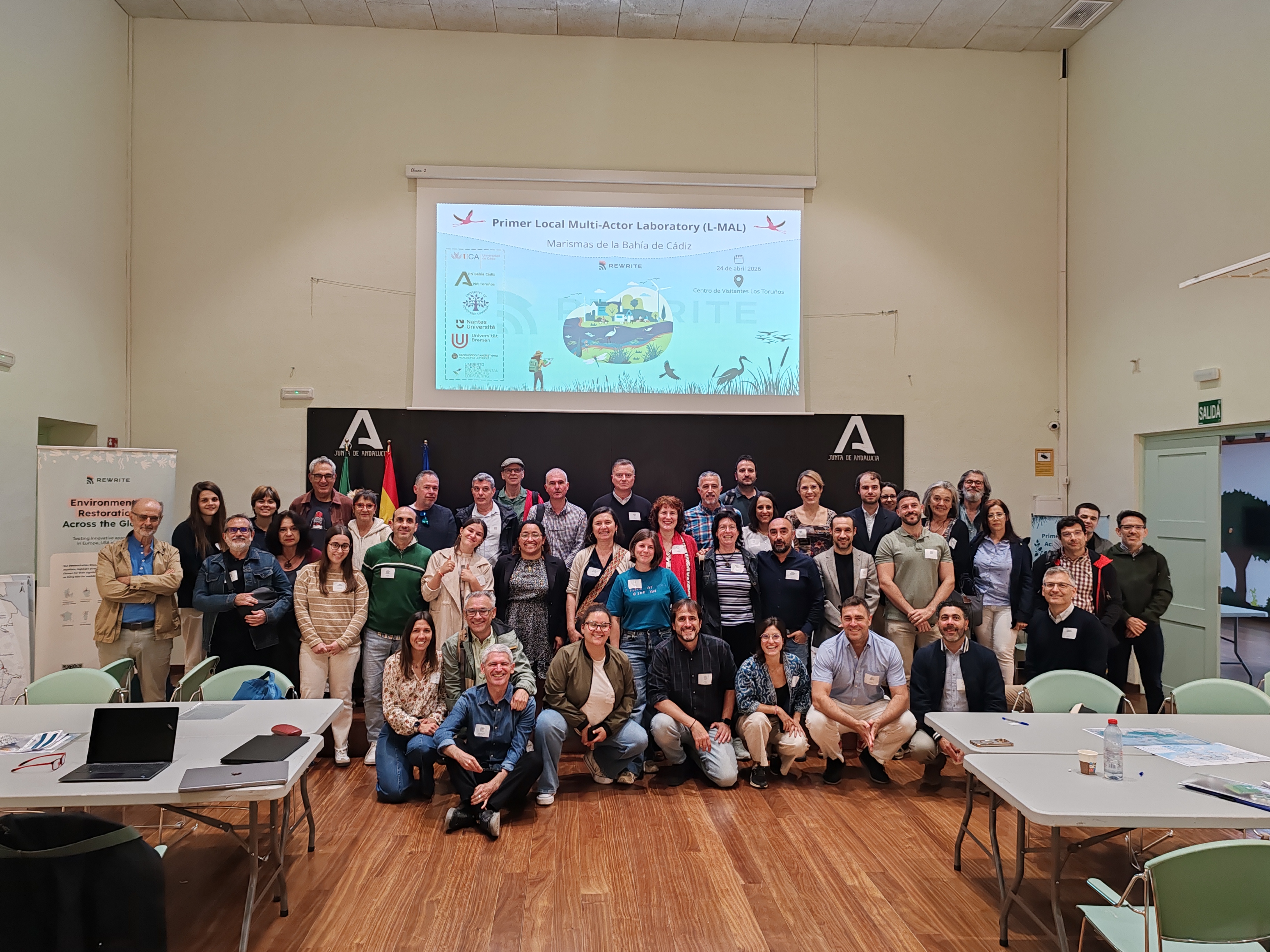
- Nearly 40 experts and social representatives move towards a consensus on management alternatives for the salt pans and marshes of the Bay of Cádiz.
- The workshop, organized by the University of Cádiz, marks the beginning of a shared roadmap that will serve as a benchmark for other case studies across Europe.
On April 24, the University of Cádiz (UCA) led a strategic action for the management of its natural environment by hosting the first Local Multi-Actor Laboratory (L-MAL) at the Los Toruños Metropolitan Park Visitor Center. This scientific-social encounter is a key component of the European project REWRITE, funded by the Horizon Europe program, which studies the restoration of coastal ecosystems (“rewilding”) as a tool to mitigate the climate crisis and preserve biodiversity.
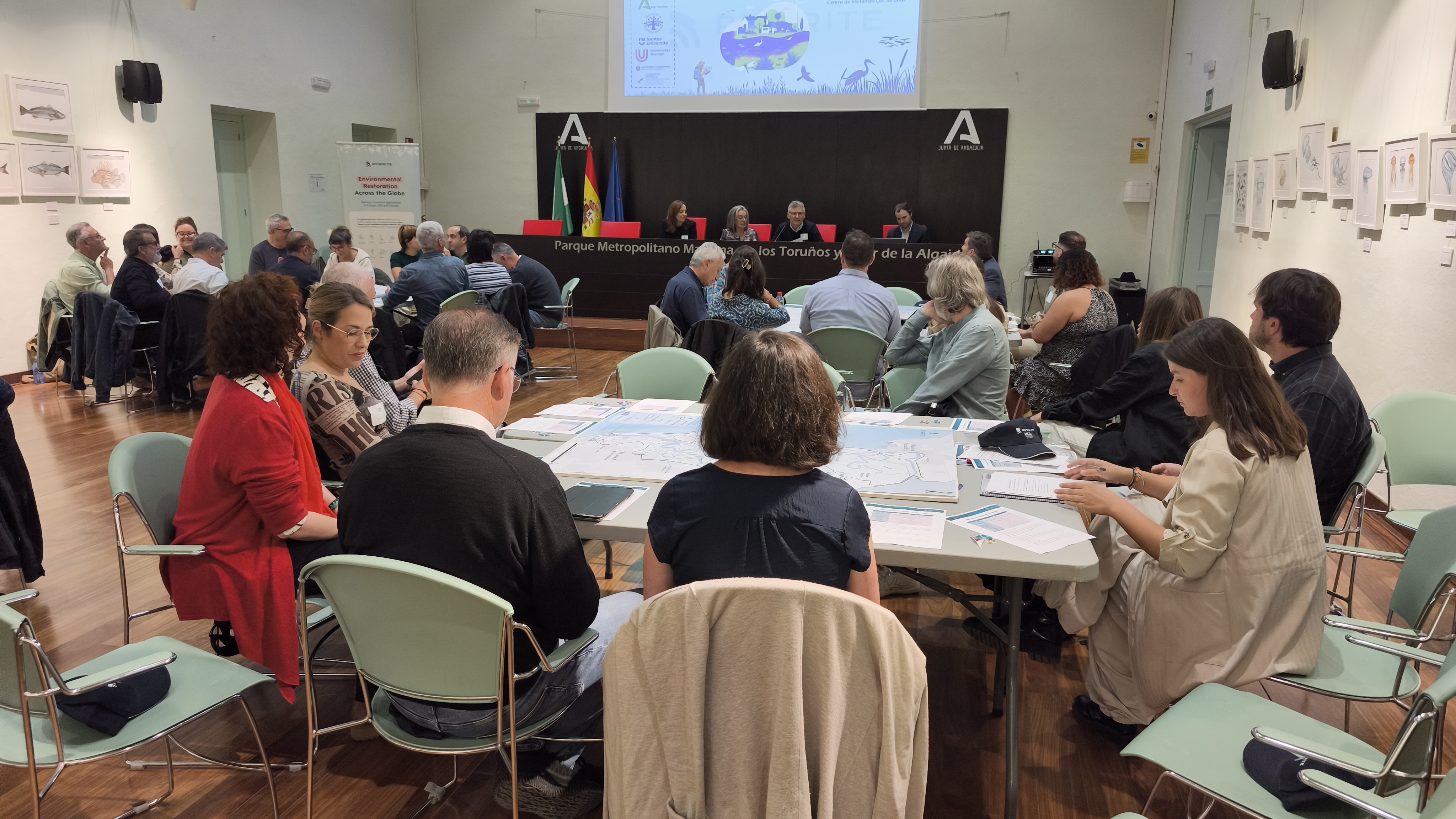
The event was jointly coordinated by the Integrated Coastal Zone Management Research Group (GIAL) and the Microbial Ecology and Biogeochemistry Group of the UCA. During the session, nearly 40 strategic stakeholders—including public administrations (Coastal Authority, Regional Government of Andalusia, and Cádiz Provincial Council), the business sector (salt producers, fish farmers, and tourism companies), NGOs, and scientists from various disciplines—worked together to outline the future of the marshes and salt pans in a meeting space designed to share perceptions and sensitivities. The activity allowed for the foundation of a shared roadmap for the Bay’s marshes and salt pans under an approach of co-responsibility and co-management. The opening ceremony featured María del Carmen Bordóns Cubeiro, Director of the Bay of Cádiz Natural Park; María J. Ortega Agüera, Vice-Rector for Research at UCA; Prof. Sokratis Papaspyrou, Principal Investigator of REWRITE-UCA, and Francisco José Vázquez Pinillos, who introduced the L-MAL and led the process.
A Participation Model for Europe
The importance of this meeting transcends the local level, as the scenario co-design model developed in Cádiz will serve as a reference to be replicated in other European case studies within the REWRITE project, in countries such as France, the Netherlands, Ireland, or Portugal. The project involves 25 institutions from 14 different countries facing similar challenges in managing their coastal ecosystems. For this reason, the session was supervised by international collaborators interested in exporting the methodology applied in the Bay.
Activities and Consensus Towards Tangible Solutions
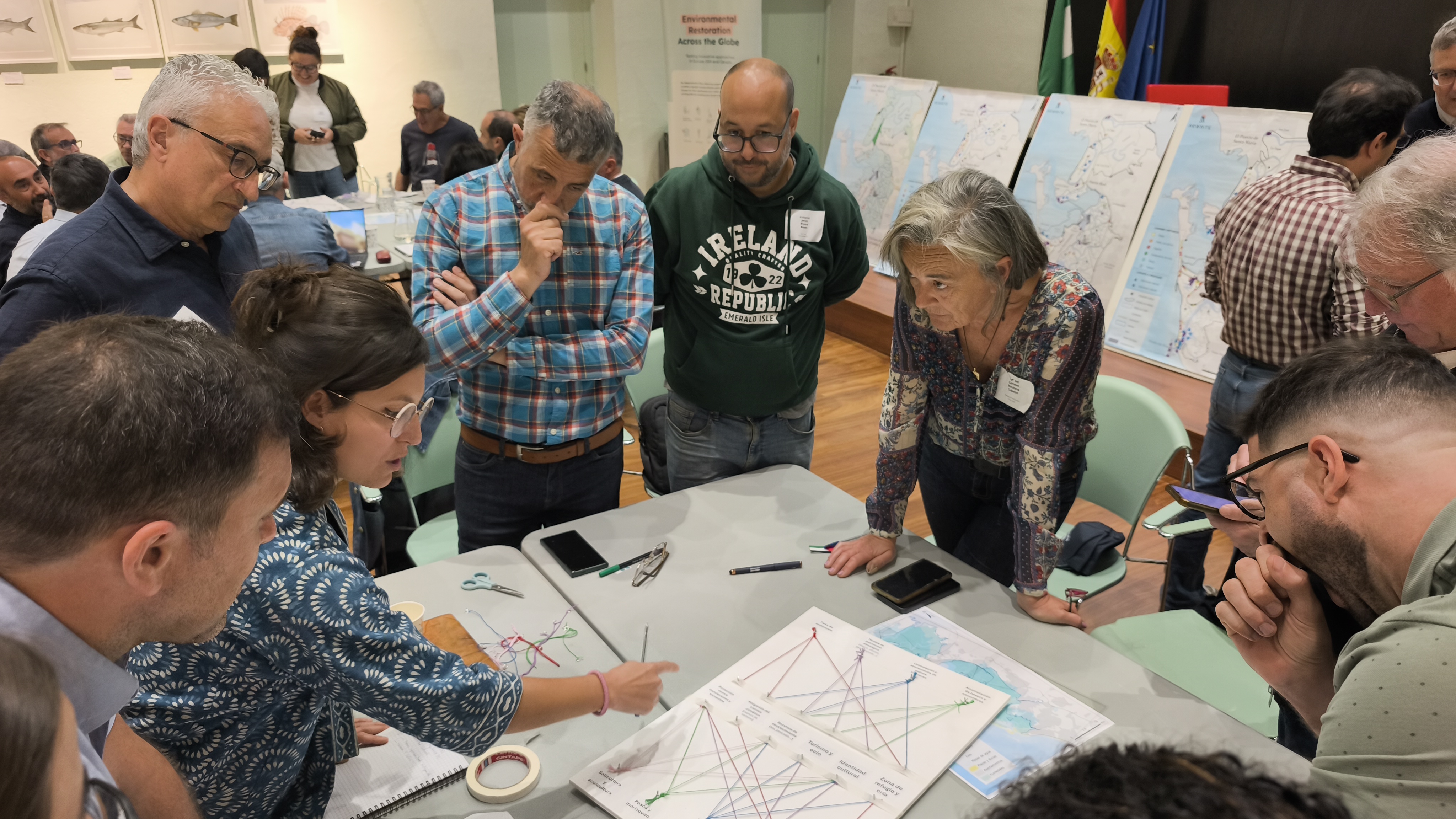
Through the dynamic activity “Footprints and Treasures of the Marsh,” participants identified sites of natural and cultural value on a map and shared elements of their ideal vision for these marshes and salt pans. Subsequently, in the “Weaving the Problem Network” phase, current challenges—such as the abandonment of salt pans or biodiversity loss—were analyzed, along with how these affect vital services like flood protection or carbon sequestration. This process mapped out the current situation and glimpsed the trend-based scenario the region might head toward. The highlight of the day was the activity “Cards on the Marsh!”, where management formulas for the Bay’s abandoned salt pans were debated. The results show a clear trend toward two complementary paths:
- Active or passive rewilding, to restore the ecological integrity of the most degraded areas.
- Extensive or semi-intensive socio-economic revitalization, by supporting salt production and artisanal aquaculture, thus preserving the area's rich cultural and historical heritage.
The workshop concluded with a presentation of the results obtained so far by researchers from the UCA and the ICMAN-CSIC (a participating entity in the project), delivered by Gabriel Navarro.
Next Steps
All the material generated will be processed by the UCA research team to produce a refined summary report. This document will serve as a practical management tool for the relevant administrations, ensuring that scientific knowledge and social sensitivity are translated into real policies.
The REWRITE project’s commitment continues, with plans to hold a second meeting in a year’s time to debate a proposed zoning plan based on today’s encounter and to work on overcoming the administrative, socio-economic, and cultural limitations that hinder the execution of these ideal scenarios to “rewrite” the future of the Bay of Cádiz together.