Special session at SERE 2026 "Rewilding across gradients: choosing pathways and measuring success in a changing world"
27 August 2026, 9:30-11:00
Brest, France
How do we decide where rewilding can work best? Which pathways should we choose in different contexts? And how can we measure whether rewilding is truly delivering benefits for nature, climate and people?
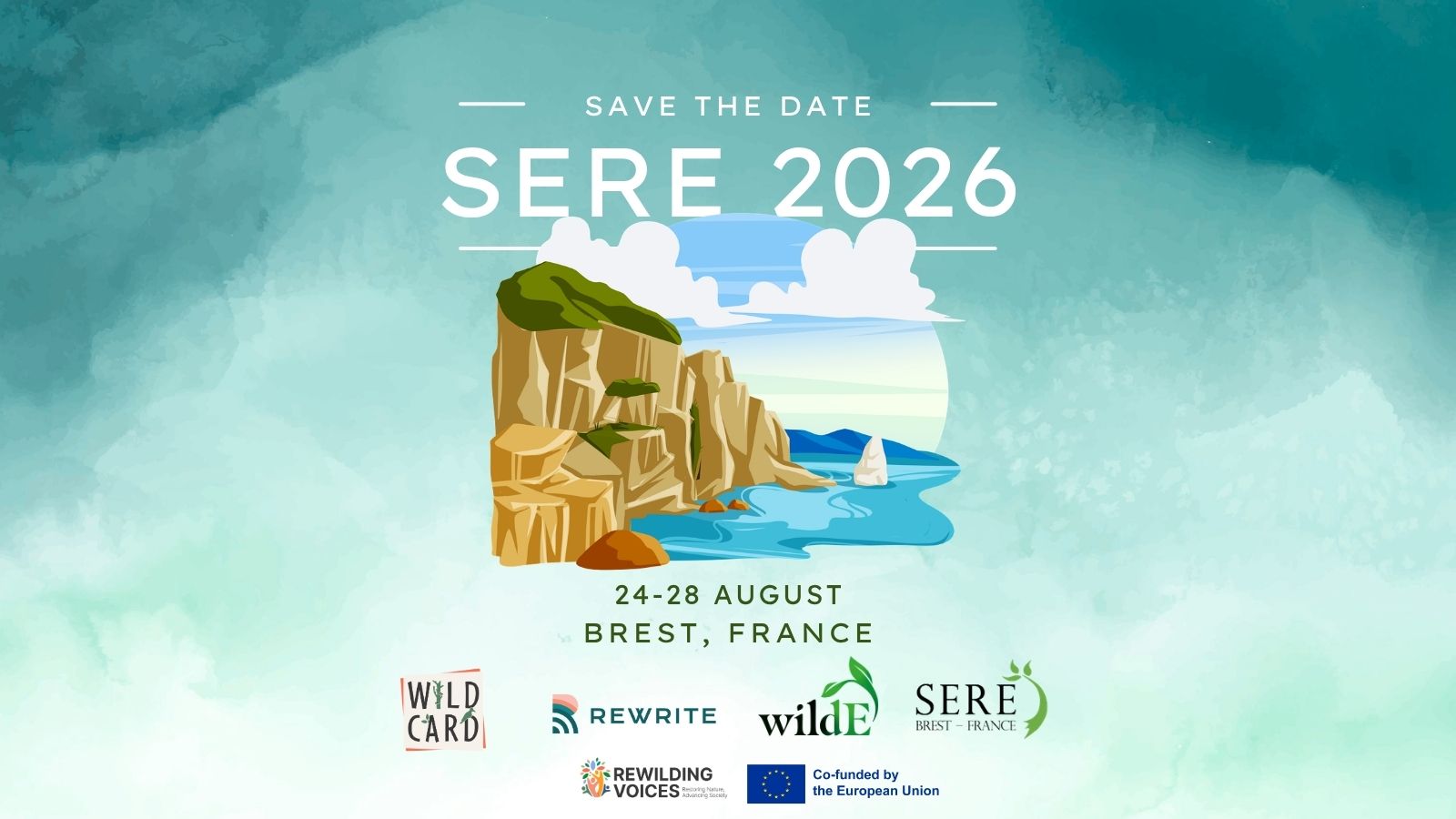
These questions will take centre stage at SERE 2026 – the 15th European Conference on Ecological Restoration, where REWRITE, wildE and WILDCARD projects will co-organise the special session: “Rewilding across gradients: choosing pathways and measuring success in a changing world”.
Rewilding is increasingly recognised as an important approach for restoring biodiversity and strengthening climate resilience. Yet it is not a one-size-fits-all solution. Rewilding unfolds across diverse ecological, climatic and socio-economic contexts, from forests and agricultural landscapes to coastal and marine ecosystems, and across a spectrum of approaches ranging from passive recovery to active intervention.
This special session will bring together researchers, practitioners and policy actors to explore three key questions shaping the future of rewilding:
Where can rewilding be most effective?
Looking across ecological and landscape gradients, the session will examine how different environments influence
rewilding opportunities, constraints and outcomes.
How do we choose the right pathway?
Speakers will discuss how decisions between natural recovery, active restoration and hybrid approaches can be guided by
ecological evidence, climate pressures, governance contexts and societal perspectives.
How do we measure success?
Moving beyond traditional biodiversity indicators, the session will explore how ecosystem functioning, climate benefits
and socio-ecological outcomes can be integrated into rewilding assessments.
The programme will feature contributions from across Europe, covering diverse ecosystems and methodologies, including coastal wetlands, forests, abandoned landscapes and marine environments. REWRITE’s own work will be represented through research on rewilding trajectories in coastal wetlands at the Ria de Aveiro Demonstrator Site.
By connecting perspectives from different ecosystems and disciplines, the session aims to strengthen knowledge exchange and support the implementation of Europe’s Nature Restoration ambitions.
Learn more about the programme and registration on the conference website.